What We Can Learn From Broken Things
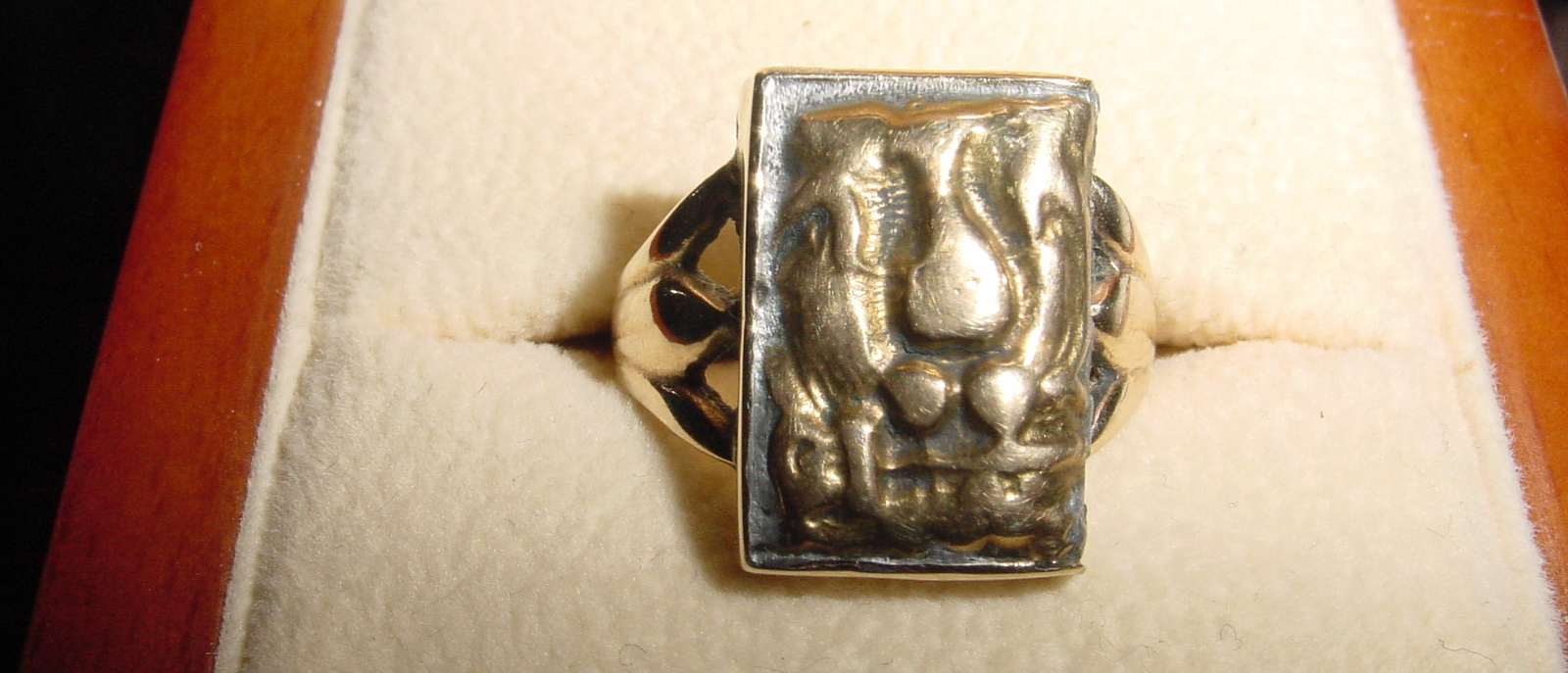
Here is a very old seal ring that I got in a bag of broken jewellery at the Value Village (same bag as the Gucci watch). It has many battle scars: it’s shank has separated from the bezel, and it has evidence of many very old lead solder repairs. But there’s a beauty in its brokenness because you can see how the piece was constructed. Gold being much rarer in olden times, embossed pieces were frequently formed by hammering out thin sheets of gold. To give some pieces more stability, this gold shell was filled with a substance such as base metal, or in this case, wax. Because the back and side of the ring’s setting as disappeared, we can see the old wax (below).
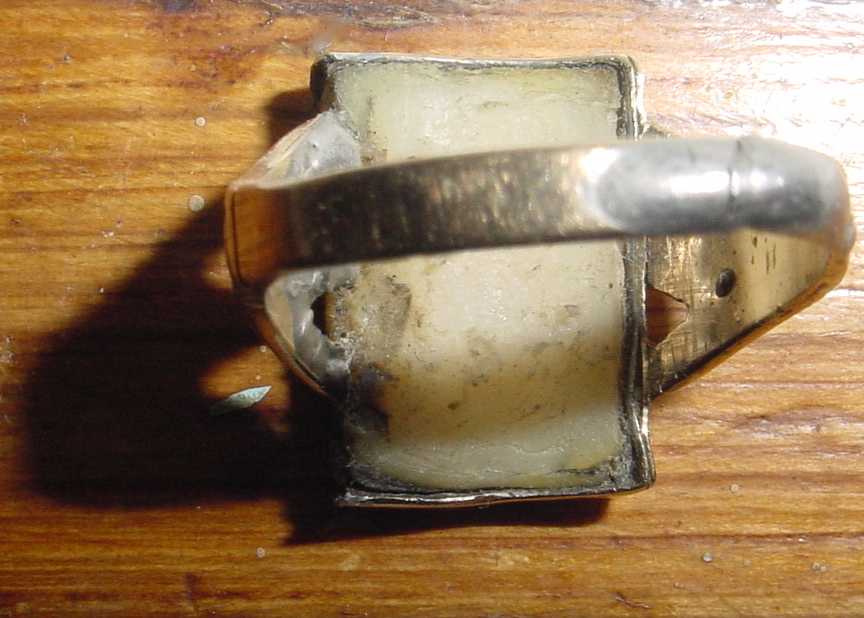
The seal itself is quite worn away and looks like it was reset in lead solder. In Victorian times, many repairs were done with lead — partially because it was cheaper than gold but also because lead is softer and has a much lower melt point. This makes it easier to work. Without having today’s controlled soldering tools at their disposal, 19th century jewellers risked melting the whole pieces instead of repairing it.
The next question is this: Do I try to repair it one more time? The lead repairs make it difficult and the seal would probably have to be taken out and reset. At what point does this work become a new creation as opposed to a restoration? Where do you find a restorer (as opposed to a repairer)? And how much will this cost? Legwork, it appears, is required.